Israel’s Problematic Government
• If you really want to understand how Israeli government policies contributed to the development of the current terrible conflict, this well-researched NYT article by Ronen Bergman and
• Liz Cheney writes in the NYT about why the Supreme Court should rule quickly on DJT’s immunity claim. The most trenchant quote from that piece:
“It cannot be that a president of the United States can attempt to steal an election and seize power but our justice system is incapable of bringing him to trial before the next election four years later.”
I agree.
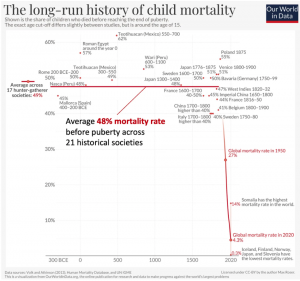
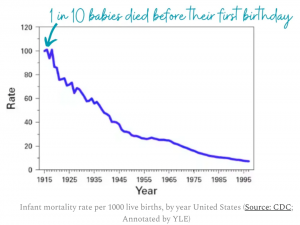
• Kristen Panthagani MD, PhD as usual writes quite effectively in Katelyn Jetelina’s Your Local Epidemiologist Substack space on the dramatic benefits of the modern world (including vaccines) on pediatric mortality. An excerpt, and illustrative graphs:
“Deaths from infectious diseases have plummeted with the discovery of bacteria and viruses, improved sanitation, pasteurization, the discovery of antibiotics, and the development of vaccines. Childhood mortality dropped astronomically, and life expectancy in grew by three decades in the twentieth century alone. The most dramatic increases are among children under 5 years old.”


• Another good piece from David Wallace-Wells in the NYT: Who ‘Won’ Covid? It Depends How You Measure. An excerpt:
“In the end, everyone got it, and probably the most important factor shaping national death totals was how many people were vaccinated before their first infection and how many weren’t. The United States could’ve done much better on that test, given that more Americans have died of Covid since the vaccines were made available to anyone who wanted them than had died to that point. But by some estimates, those vaccines also saved more than three million American lives.”
Kaiser Permanente trialed using ambient AI scribes to determine whether they were of net value to providers and deemed it a success, “saving most of the physicians using it an average of one hour a day at the keyboard” and that the quality of the transcriptions was for the most part quite acceptable. See the implementation described here in NEJM Catalyst.
• This was a good post from Tomas Pueyo on the benefits of SO2 stratospheric injection for ameliorating greenhouse gas temperature rise. See also Professor David Keith’s Group and their work at Harvard, including:
Weisenstein, D. K. and Visioni, D. and Franke, H. and Niemeier, U. and Vattioni, S. and Chiodo, G. and Peter, T. and Keith, D. W. An interactive stratospheric aerosol model intercomparison of solar geoengineering by stratospheric injection of SO2 or accumulation-mode sulfuric acid aerosols. Atmospheric Chemistry and Physics, 2022, Vol 22 #5:2955-2973
• Katelyn Jetelina and Kristen Panthagani do another excellent job explaining why the Florida Heath Department has yet again put politics ahead of science in the handling of Florida’s school measles outbreak, and in doing so Ladapo has put the health of the citizens that his office is charged with protecting at risk. Read about it in their Your Local Epidemiologist blog post.
• Jeremy Faust remarks in his Inside Medicine blog on how much air exchange can affect Covid-19 transmission (as expected, it makes a big difference).
• Heather does a nice job laying out the Russian connections with the House’s absurdist Biden bribery investigation (just one more in a series of Republican show investigations) see her latest Letters from an American.
• Matt Yglesias explains why DJT’s proposed tariffs are inefficient, will raise prices and are bad for consumers – in effect a highly regressive tax.
“Most studies indicate that the price of Trump’s tariffs have been primarily born by American consumers (American Action Forum, Cato Institute, Tax Foundation)…So it’s really worth saying that whatever you make of industrial policy, what Trump is suggesting is not a remotely strategic approach to national economic development. If anything, Trump’s entire trade agenda — not only these tariffs, but things like his 2020 effort to score a giant sale of soybeans to China — is geared around de-industrializing the United States and turning us into a primary commodity exporter…The right’s intellectual trajectory on these topics is somewhat alarming. Everyone in DC understands that Trump did not come up with this policy proposal based on any kind of detailed study of the issue. Unless it benefits him personally, Trump just pulls ideas out of his ass because he likes the vibe.”